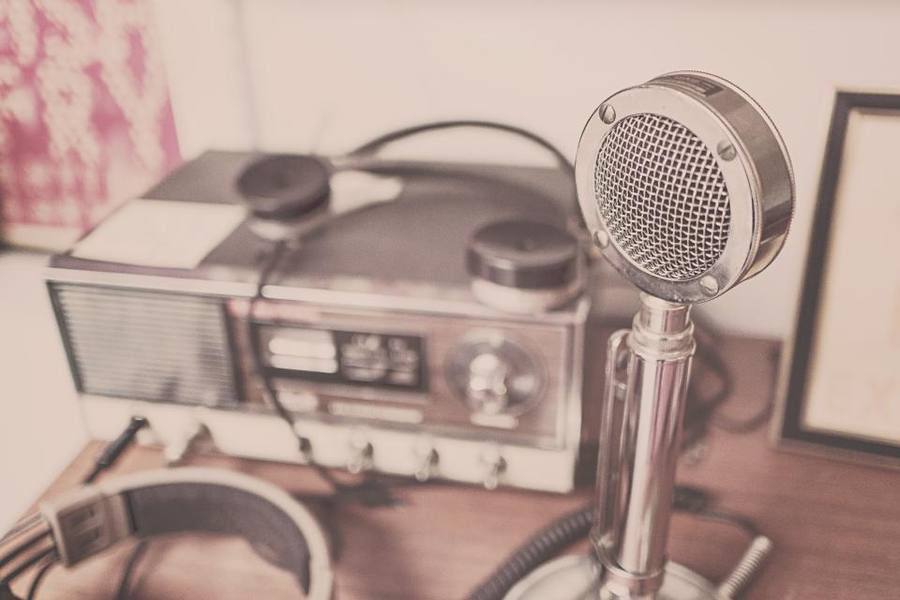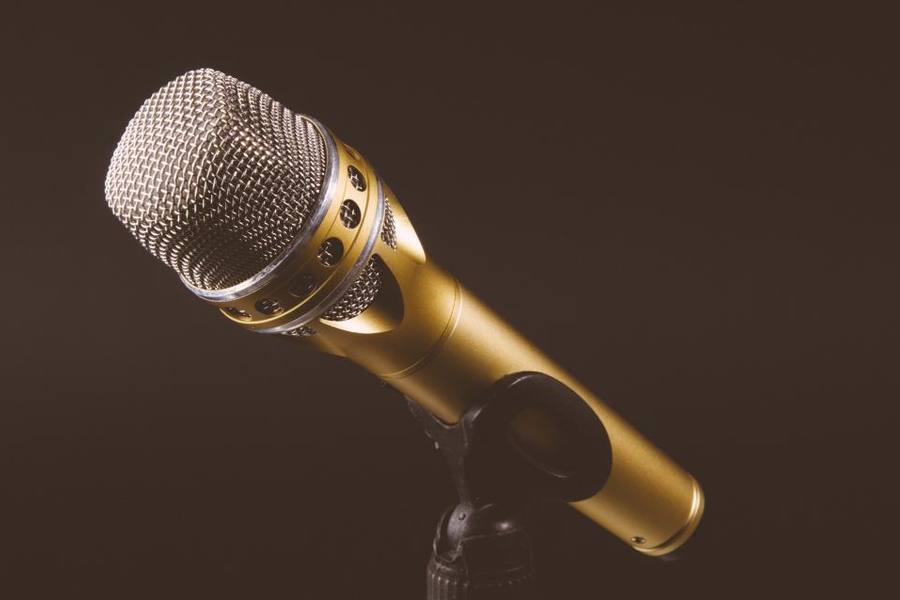
Symbolbild (Stockfoto); nicht das abgebildete Produkt.
Dynamic Rather Than Condenser
The most common microphone mistake for home offices is buying a large-diaphragm condenser. Condensers are sensitive and detailed, which in a treated studio is exactly right and in an untreated room means picking up the refrigerator, the keyboard, the neighbour's dog and the reflections off every hard surface.
A dynamic microphone is far less sensitive and has a tighter pickup pattern, so it captures your voice close up and rejects most of the room. For anyone recording in a spare bedroom or an open-plan flat, that rejection matters more than any specification on a frequency chart.
The consequence is that you must speak close to it — within a hand's width. Used at arm's length a dynamic mic sounds thin and distant, and this is the single most common cause of disappointment with one.
USB And XLR Together
The MV7+ offers both a USB connection and a traditional XLR output, and that dual capability is unusual and practical. USB means it works immediately with a computer and no interface; XLR means it can be connected to a proper audio interface or mixer later.
For someone starting out, USB removes a purchase and a complication. For someone who later buys an interface, the microphone does not become redundant, which is a genuine hedge against outgrowing your equipment.
Both outputs can be used at once, which is useful for recording a clean backup locally while streaming.
Processing And Controls
The USB side includes onboard processing — compression, limiting, equalisation and a real-time denoiser — configurable in software. For anyone who does not want to learn audio engineering, sensible processing applied at the microphone means a usable sound without a plugin chain.
There is also a touch panel on the microphone for gain and monitoring, and headphone monitoring with adjustable mix, which lets you hear yourself without the delay that monitoring through software introduces.
The processing is optional and can be bypassed entirely if you would rather handle it yourself, which is the correct way to offer such a feature.
Against The Alternatives
Against a USB condenser such as a Yeti, the MV7+ sounds dramatically better in an untreated room because it rejects what the condenser eagerly captures.
Against the older MV7, the plus version adds the denoiser, more onboard processing and a better touch panel; the fundamental sound is similar.
Against a broadcast dynamic plus a separate interface, the MV7+ is simpler and cheaper and gives up some flexibility and ultimate quality.
Who Should Not Buy It
Anyone recording in a properly treated room who wants maximum detail should consider a condenser, where the sensitivity becomes an advantage rather than a liability.
Anyone who will not speak close to the microphone will be disappointed, and a headset or a lavalier is a better answer for them.
Anyone needing to capture a room, an instrument at distance or multiple speakers around a table needs a different type of microphone entirely.
The Verdict
The right microphone for an ordinary room: dynamic rejection that keeps the space out of your recording, both USB and XLR so it grows with you, and processing that makes it sound good without expertise.
It demands close mic technique and it is not the microphone for a treated studio chasing maximum detail.
For home office calls, podcasting and streaming in a normal room, it is among the safest recommendations available.
Auf einen Blick
Vorteile
- Dynamic pattern rejects untreated room noise and reflections
- USB and XLR outputs, usable simultaneously
- Onboard compression, limiting and denoising, all optional
- Headphone monitoring with adjustable mix and no software delay
Nachteile
- Requires speaking within a hand's width to sound right
- Less detailed than a condenser in a treated room
- Expensive relative to entry USB microphones
- Wrong tool for capturing a room or several speakers
Häufig gestellte Fragen
Why a dynamic mic rather than a condenser?
Because most home rooms are untreated. A condenser captures the room, the keyboard and the fridge along with your voice; a dynamic rejects most of that. In a treated studio the reverse argument applies, but very few home offices are treated.
How close do I have to be?
Within roughly a hand's width. Dynamic microphones sound thin and distant at arm's length, and this is the most common reason people are disappointed by one. A boom arm makes maintaining that distance comfortable.
Do I need an audio interface?
No — the USB connection works directly with a computer and the onboard processing means it sounds good without one. The XLR output is there for later, if you buy an interface, so the microphone does not become redundant.
Spezifikationen
| Type | Dynamic |
| Outputs | USB and XLR, simultaneous |
| Onboard processing | Compression, limiting, EQ, denoiser |
| Monitoring | Headphone with adjustable mix |
| Controls | Touch panel for gain and mix |
| Pattern | Tight, close-range |
| Software | Optional; processing configurable |
| Best for | Untreated rooms, close speech |
Fazit
The safest microphone for a normal untreated room: it keeps the space out of your voice, works over USB now and XLR later. You must speak close to it.
Preis auf Amazon prüfen